


In the rapidly evolving world of AI-generated art, understanding the training of diffusion models reveals the magic behind stunning visuals. This technique not only fuels creativity but also raises questions about the technology’s implications. Explore how these innovative models transform random noise into captivating images, shaping the future of digital artistry.
Understanding the Basics: What Are Stable Diffusion Models?
Understanding the intricacies of Stable Diffusion models unveils the genius behind some of the most captivating AI-generated art today. At their core, these models are sophisticated algorithms that generate images based on textual descriptions. They leverage deep learning techniques, particularly utilizing a method called diffusion, to create stunning visual representations. By systematically refining random noise through a series of steps, the models gradually transform this noise into coherent images that align with the input prompts.
How Stable Diffusion Models Work
Stable Diffusion models, often referred to as checkpoint models, are essentially fine-tuned versions of base models like Stable Diffusion 1.5 or SDXL. These models use pre-trained weights to generate artwork in specific styles or themes. The training process involves feeding vast amounts of data, comprised of images and their corresponding textual descriptions, into the model. This enables the model to learn the relationships between words and visual elements, allowing it to generate artwork that resonates with user prompts.
The process of generating art through these models follows a few key steps:
- Noise Initialization: The model starts with a random pattern of noise.
- Iterative Refinement: Over a series of iterations, it refines this noise by referencing learned relationships from the training data.
- Final Image Generation: After sufficient refinements, the model produces an image that corresponds closely to the input prompt.
The ability to generate diverse outputs from similar prompts showcases the model’s robustness. For example, prompting the model with the phrase “a serene sunset over a tranquil lake” can yield multiple variations, each uniquely capturing different elements of serenity and color.
Incorporating advanced techniques such as CLIP (a language model that aids in understanding text prompts), Stable Diffusion models significantly enhance user experience. As users engage with these models, they not only tap into a wealth of artistic possibilities but also participate in an evolving dialogue between AI and human creativity. The continuous refinement and training of these models only further expand their potential, making them invaluable tools for artists, marketers, and content creators alike.
The Training Process: Step-by-Step Guide to Creating AI Art
Creating stunning AI art using Stable Diffusion models involves an intricate training process that armatures and professionals alike can learn to master. This journey from initial concepts to finished artworks is both fascinating and technical, engaging artists and developers in the evolving landscape of AI-generated creativity. By understanding the pivotal steps in training these models, you can harness their full potential to produce unique pieces tailored to your artistic vision.
1. Data Preparation
The first step in training a Stable Diffusion model is gathering and preparing a dataset. This dataset should reflect the styles and elements you want your model to replicate. Artists often curate collections of images that resonate with their desired output. Once compiled, the images must be cleaned and formatted consistently-ensuring aspects such as dimensions and file types are uniform-to optimize the training process.
2. Model Selection
Choosing the right base model is crucial. Stable Diffusion offers various pre-trained models such as Stable Diffusion v1.5, SDXL, or Flux AI, each with unique strengths suited to different types of artistic expression. Utilizing a model that aligns closely with your artistic goals will enhance the overall quality of the generated art.
3. Fine-Tuning the Model
After selecting a base model, fine-tuning is necessary to better fit your specific artistic needs. This step involves retraining the model on your curated dataset. During this phase, parameters such as learning rate and optimizer settings should be adjusted to ensure the model effectively adapts to the new data without overfitting. Fine-tuning allows for the incorporation of specific styles or themes, essential for generating distinctive outputs.
4. Evaluation and Iteration
Once training is complete, thorough evaluation is vital. Check how well the model generates images that align with your artistic intent. Feedback loops are essential here; you may need to return to the dataset or adjust model parameters for better results. Gathering input from test audiences can also provide insights into how effectively the model captures the desired styles, allowing for iterative refinements until you reach your artistic goals.
By mastering these steps in the training process, artists can unlock new levels of creativity and bring their unique visions to life through AI-generated art. The intersection of traditional artistry with emerging technology opens a realm of possibilities, making it an exciting frontier for both seasoned creators and newcomers alike.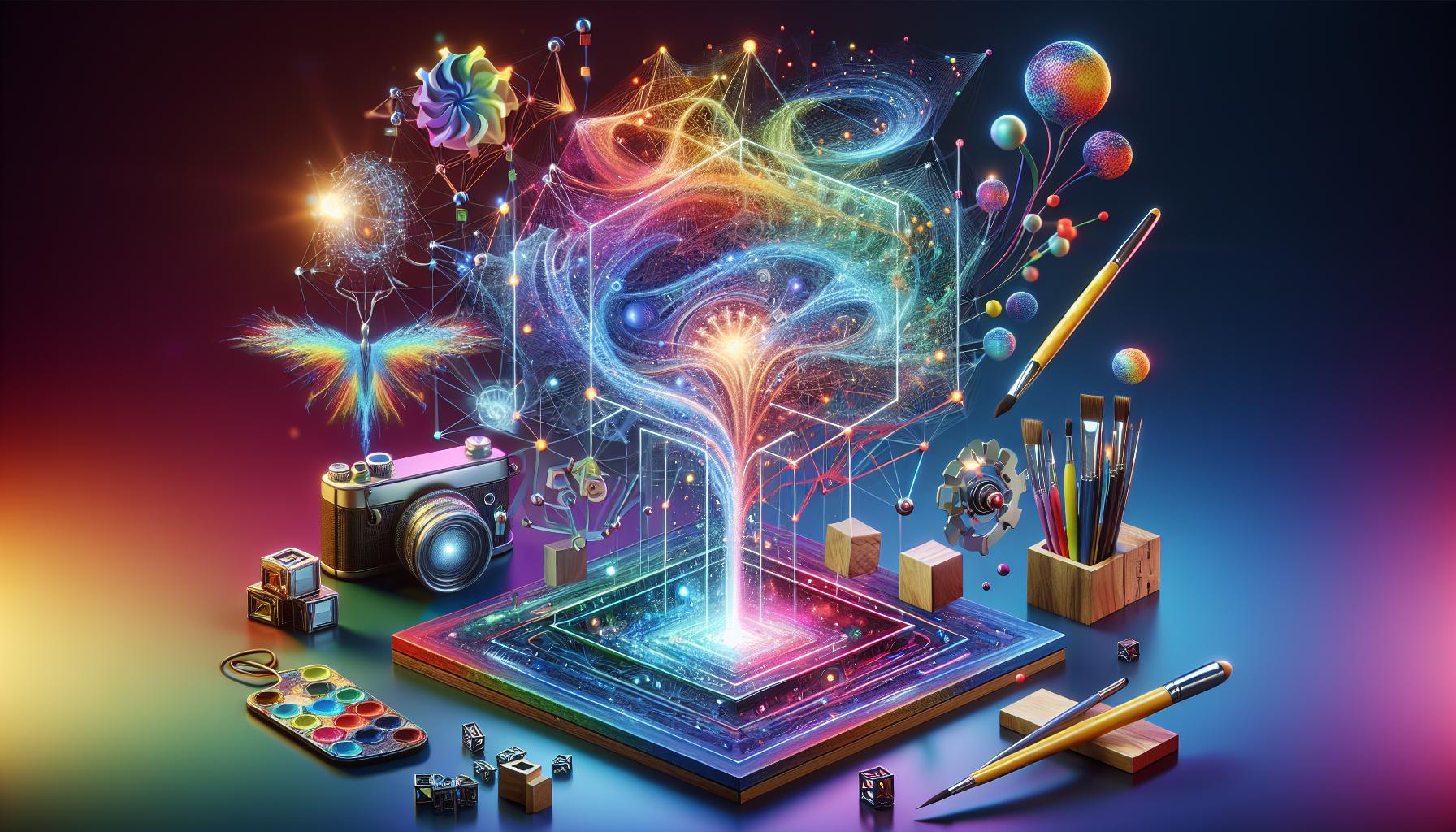
Data Matters: How Datasets Influence Model Performance
The role of datasets in shaping model performance cannot be overstated, especially in the context of training advanced models like Stable Diffusion. A dataset is essentially the fuel that drives these models, and its quality, diversity, and size directly correlate with the resulting model’s effectiveness in generating art. Poor-quality or inadequately diverse data can lead to suboptimal model performance, manifested in blurry images, limited creativity, or biases in generated content.
Quality and Size: The Cornerstones of Dataset Effectiveness
When constructing datasets for training, researchers must prioritize both the quality and size of the data. Studies have shown that larger datasets generally lead to better performance in machine learning models. This is because more data provides a broader range of examples from which the model can learn, helping it generalize better to unseen situations. Techniques such as data augmentation can enhance dataset size without the need for extensive additional data collection. However, merely increasing the volume of data is insufficient; it is equally vital to ensure the data is representative of the desired outcomes. For instance, in the context of Stable Diffusion, a balanced dataset that includes various artistic styles and subjects results in a more versatile model capable of producing higher-quality images across different genres.
Influence of Data on Model Performance
Another critical aspect of datasets in machine learning is their influence on model predictions. Influence estimation models can provide insights into how individual training instances affect the trained model’s performance. Understanding this influence can help practitioners focus on improving specific data points rather than reshuffling large swathes of data. For example, if a certain type of artwork consistently leads to poor generation outcomes, identifying and refining that specific training example can result in significant overall improvements.
- Data Diversity: Including a wide range of artistic styles and techniques.
- Quality Control: Ensuring high resolution and clarity in images used for training.
- Balanced Representation: Avoiding over-representation of any single genre.
Furthermore, when evaluating datasets, it is essential to analyze their fairness and robustness. A well-curated dataset should not only enhance the model’s performance but also ensure that it operates without bias, making it an equitable tool for all users. By leveraging data selection approaches informed by insights from influence estimation, creators can enrich model utility and versatility, ensuring robust outputs across varied user demands.
Ultimately, the intricacies of dataset design and selection play a pivotal role in the development of sophisticated models like those seen in the exploration of AI art engines, particularly in workflows like Stable Diffusion. Key considerations in the dataset’s construction-from size and quality to diversity-are vital in determining how effectively a model can convert learned representations into cohesive, captivating artistic outputs.
Fine-Tuning Techniques: Enhancing the Art Engine’s Capabilities
Harnessing the power of fine-tuning can drastically transform how AI art engines, like those behind Stable Diffusion models, generate and refine creative outputs. Fine-tuning allows a pre-trained model to be adapted to specific tasks, which can dramatically improve the results for artists and developers alike. This technique is particularly pivotal for enhancing the performance of models in creative applications where precision and style are paramount.
One key aspect of fine-tuning is the ability to leverage domain-specific data. By introducing carefully curated datasets that align with particular artistic styles or themes, developers can teach the model to recognize and replicate nuances that are unique to a certain genre. For instance, when an AI model is fine-tuned with artworks from Impressionism or abstract forms, it becomes adept at creating outputs that reflect those styles more authentically. This tailored training approach not only speeds up the model’s learning curve but also enhances the quality of its outputs.
Essential Steps for Effective Fine-Tuning
To effectively fine-tune an art engine like Stable Diffusion, consider the following steps:
- Data Collection: Gather a diverse set of images and their corresponding metadata that exemplify the style or genre you want the model to learn.
- Preprocessing: Convert your images into a suitable format for input into the model. This may involve resizing, normalization, and augments to enrich your dataset.
- Training Adjustments: Use transfer learning to adjust the model’s parameters. This means retaining the learned weights from previous training but adjusting them based on your new dataset.
- Evaluation: Continuously assess the performance through qualitative reviews and quantitative metrics; optimize your approach based on feedback.
The interplay between data specificity and model adaptability is what makes fine-tuning a powerful tool in the arsenal of anyone looking to enhance an AI art engine’s capabilities. For instance, by integrating local art movements into the training data, artists can utilize these advanced models to generate culturally resonant and innovative artworks that truly reflect specific aesthetic preferences. The capabilities of the Stable Diffusion model and similar architectures are only limited by the creativity of the datasets they are trained on and the finesse of the fine-tuning process.
The Role of Neural Networks in Image Generation
Neural networks have revolutionized the field of image generation, enabling the creation of stunning visuals that often appear indistinguishable from real photographs. By harnessing vast datasets, these sophisticated algorithms learn to mimic the intricate patterns found in images, allowing them to generate entirely new visuals. This complex process involves modeling the probability distribution of the input images, which is a crucial element behind many popular algorithms like those discussed in “How Are Stable Diffusion Models Trained? Behind the AI Art Engine.”
Understanding the Mechanics of Neural Networks
Neural networks employed in image generation operate through layers of interconnected nodes that mimic the human brain’s architecture. Each connection processes specific features of the input data, refining its output as the layers progress. For instance, in systems like Generative Adversarial Networks (GANs), two networks-a generator and a discriminator-compete against each other, resulting in increasingly realistic images as they learn from their interactions. The generator creates new images, while the discriminator evaluates them against real images, thus continuously improving their accuracy and quality [[2](https://medium.com/@sivavimelrajhen/a-basic-introduction-to-image-generation-methods-25719fdea31e)].
The Role of Advanced Models in Image Generation
State-of-the-art models such as the Deep Recurrent Attentive Writer (DRAW) take this technology a step further by incorporating attention mechanisms that allow the model to focus on specific parts of an image during generation. This approach closely resembles human visual perception, where we do not process an entire visual scene at once but rather look at key details sequentially [[3](https://arxiv.org/abs/1502.04623)]. By combining these sophisticated techniques with variational auto-encoding frameworks, DRAW can construct complex images iteratively, resulting in high-fidelity outputs.
As explored in “How Are Stable Diffusion Models Trained? Behind the AI Art Engine,” the training process involves feeding the neural network a diverse array of high-quality images. This extensive training enables the model to grasp the nuances of image features like color, texture, and shape, thereby generating unique outputs that reflect its learned knowledge. As artists and developers uncover ways to fine-tune these models, we can expect even more advanced capabilities, leading to innovative applications in fields ranging from entertainment to design.
In conclusion, the evolution of neural networks has fundamentally changed how we create and understand images. By continuously improving training techniques and exploring new model architectures, the potential for generating unprecedented artistic expressions is vast. As tools like stable diffusion models become more accessible, the creative possibilities for artists and technologists alike expand exponentially.
Evaluating Output: How to Assess AI-Generated Artwork
Evaluating AI-generated artwork can be both fascinating and complex, especially when we consider the advanced mechanisms behind models like Stable Diffusion. These models, trained on vast datasets of images and text, are capable of producing visually striking results from simple prompts. To effectively assess the quality and relevance of the generated images, it is crucial to adopt a structured approach.
Key Criteria for Assessment
When evaluating artwork created by Stable Diffusion models, consider these essential criteria:
- Relevance to Prompt: How well does the image reflect the original text prompt? The generated art should encapsulate the essence and details specified in the input.
- Aesthetic Quality: Examine the visual appeal of the artwork. This includes composition, color harmony, and overall artistic expression.
- Detail and Complexity: Look for intricacy in the elements of the artwork. Higher detail often indicates a well-trained model capable of interpreting complex prompts.
- Innovation and Uniqueness: Assess whether the artwork presents a fresh perspective or creative interpretation that sets it apart from existing works.
Practical Assessment Techniques
To refine your evaluation process, here are some practical steps:
- Use a diverse range of prompts during generation, and compare multiple outputs for the same input. This variety will help you gauge the model’s consistency and flexibility.
- Engage with community platforms, like Civitai, where you can share your findings and see how others perceive similar outputs. Community feedback can enhance your understanding of quality metrics.
- Document your assessments consistently. Create a checklist based on the key criteria outlined previously, allowing for a structured comparison between different outputs.
As AI-generated artwork continues to evolve, understanding the nuances of assessment will empower creators to harness the full potential of tools powered by technologies such as those described in the guide on the training mechanisms of Stable Diffusion models. This will not only enhance the critique of generated art but also contribute to the growth of AI-driven creativity.
Real-World Applications: Where Stable Diffusion Models Shine
The rise of AI art generation has opened a floodgate of creative possibilities, with Stable Diffusion models at the forefront of this revolution. These models excel in translating textual descriptions into stunning, photorealistic images, showcasing their potential across various fields. As the landscape of digital content creation evolves, Stable Diffusion becomes an indispensable tool for artists, marketers, and businesses alike, bridging the gap between imagination and visual reality.
Creative Industries
In creative fields, artists are leveraging Stable Diffusion’s capabilities to push the boundaries of traditional art forms. Digital artists can quickly generate conceptual pieces, serve as the basis for further artistic exploration, or even enhance their portfolios with innovative visuals. Graphic designers utilize the technology to create unique branding elements, promotional materials, and eye-catching web content. The flexibility of Stable Diffusion allows for rapid iteration, enabling creatives to refine their work in real-time based on feedback and inspiration.
Advertising and Marketing
Market professionals are also harnessing the power of Stable Diffusion to create compelling advertising campaigns. By generating visuals that resonate with target audiences, brands can craft stories that enhance their connection with consumers. With the model’s ability to produce high-quality images with just a few words, marketing teams can rapidly develop a diverse array of visuals for social media, email campaigns, and other advertising platforms. This not only speeds up the creative process but also ensures that content remains fresh and relevant in a fast-paced digital environment.
Education and Training
Educational institutions are beginning to incorporate Stable Diffusion in their curricula, teaching students the fundamentals of AI and digital art. Through hands-on projects that utilize this model, students learn about the intersection of technology and creativity. This approach equips them with essential skills for future careers, whether in game design, animation, or content creation. By understanding how Stable Diffusion is trained and utilized, students gain insights into both the technical processes and ethical considerations surrounding AI-generated content.
For businesses and individuals looking to explore these real-world applications, engaging with platforms powered by Stable Diffusion, such as Stable Diffusion XL and similar interfaces, can provide a straightforward entry point. Users are encouraged to experiment with the generator to see firsthand how versatile and powerful this AI art engine can be. This hands-on experience not only fosters creativity but also inspires new ideas about how AI can transform visual storytelling across various domains.
Ethical Considerations: Navigating the Impact of AI in Art Creation
The advent of AI in art creation has ignited a complex dialogue surrounding ethical considerations. As tools like Stable Diffusion enable users to generate stunning visuals with just a few prompts, challenging questions arise about authorship, copyright, and the potential impacts on traditional artists. The transformative nature of such models means that while they democratize art generation, they also threaten the livelihoods of human creators, raising concerns about fair use and recognition within the art community.
One of the primary ethical dilemmas is the transparency of AI-generated works. Artists and consumers alike should be aware of the origins of the artwork they engage with. Ethical practices suggest that creators must clearly label AI-generated art and credit any underlying influences, including specific datasets or prior artists whose work may have informed the AI’s style. This practice not only upholds the integrity of the art community but also encourages a respectful dialogue about the role of traditional artists in an increasingly digital landscape [2].
Moreover, there’s a significant discourse around the safeguards needed to prevent malicious use of AI art models. With the ease of generating images comes the potential for misuse, such as creating harmful or misleading content. Experts argue for the necessity of robust ethical frameworks and regulations that can handle the unique challenges posed by AI technologies. As highlighted by ethical discussions in AI development, controls like limiting image generation or moderating content will become more crucial as these models evolve and become more widely adopted [1].
In practice, addressing ethical issues involves both proactive measures and community engagement. AI developers should continually seek input from artists and ethicists to design systems that respect creative rights and cultural contributions. By integrating transparent data practices and fostering a culture of accountability, the art community can navigate the complexities of AI-generated content, lending legitimacy to both AI innovations and the artists who inspire them.
Faq
What is the basic concept of Stable Diffusion models?
Stable Diffusion models use a latent diffusion technique to generate images from text prompts. By interpreting textual descriptions, these modelscreatehighlydetailedimagesenablinguserstovisualizeconceptsquicklyandefficiently
These models work through a process where inputs are encoded into a latent space. The model then decodes this latent representation back into a visual format. This ability allows for the creation of photo-realistic images from simple text within moments, empowering creative possibilities.
How are Stable Diffusion models trained?
Training Stable Diffusion models involves using vast datasets of images and their corresponding textual descriptions. This training allows the model to understand how to associate certain words with visual features.
During training, the model learns patterns and relationships in the data, optimizing itself to generate accurate representations of the prompts it’s given. The underlying process leverages machine learning techniques to refine output quality continuously. For a deeper understanding of this process, explore more on this Reddit thread.
Can I use Stable Diffusion generated images for commercial purposes?
Yes, you can generally use images generated by Stable Diffusion for commercial purposes, subject to specific licensing terms. Always verify the conditions associated with the software or models you’re using.
Since many models, including Stable Diffusion, are open-source or come with permissive licenses, creators often have the freedom to incorporate generated images into commercial projects. However, consulting documentation on copyright and licensing for AI-generated content is recommended to avoid potential issues.
Why do Stable Diffusion models utilize latent space?
Stable Diffusion models leverage latent space due to its ability to efficiently represent complex data. Latent spaces allow models to encode intricate details without direct observation of the data’s inherent noise.
This abstraction enables the model to generalize better and create coherent images from varied prompts. The latent representation serves as a compressed version of the data, allowing for faster processing and improved creativity in generated outputs.
How does text-to-image generation work in Stable Diffusion models?
Text-to-image generation in Stable Diffusion models involves interpreting user-provided text and translating it into visual elements. The model uses its training to recognize how words correlate with visual components.
Once the text prompt is processed, the model creates a latent representation that captures the essence of the prompt. This representation is then transformed into an image, showcasing the technology’s ability to turn concepts into reality almost instantly.
What are the limitations of using Stable Diffusion models?
While Stable Diffusion models are powerful, they do have limitations. Generated images may sometimes lack detail or contain inaccuracies that do not align perfectly with the prompt.
Moreover, the quality of images can vary depending on the specificity of the prompts provided. Vague or overly broad prompts might yield less satisfactory results. To maximize output quality, it’s essential to craft clear and detailed prompts.
Why is understanding the training process of Stable Diffusion models important?
Understanding the training process of Stable Diffusion models is crucial for effective use. Knowing how they interpret prompts can help users create better, more specific requests that align with their artistic vision.
Additionally, awareness of the training data and techniques involved provides insight into the models’ capabilities and limitations, enabling users to optimize their outcomes when using these advanced artistic tools.
What resources are available for learning more about Stable Diffusion?
Numerous resources exist for those looking to delve deeper into Stable Diffusion models. Websites like Stable Diffusion Online provide user-friendly platforms for experimenting with image generation.
Moreover, community forums and documentation can offer valuable insights, tips, and tutorials on maximizing the potential of these AI-powered tools. Engaging with the community can enhance your understanding and creative output.
Closing Remarks
In conclusion, understanding how Stable Diffusion models are trained reveals the intricate dance between data, algorithms, and artistic expression. By grasping the fundamentals-from pre-training on diverse datasets to fine-tuning with specialized techniques like Dreambooth and LoRA-you can appreciate the sophisticated processes that enable these AI tools to generate stunning visuals. This journey not only demystifies the technology behind AI art but also invites you to take part in its evolution. Whether you’re an enthusiastic beginner or an experienced practitioner, you’re encouraged to dive deeper into the world of AI-generated imagery. Experiment with training your models, share your creations, and contribute to the growing landscape of digital art. The possibilities are endless, and your creativity could lead to the next breakthrough in this fascinating field. Embrace the tools at your disposal and embark on your own artistic adventure today!


